

WHAT IS MOTS-C (10MG)?
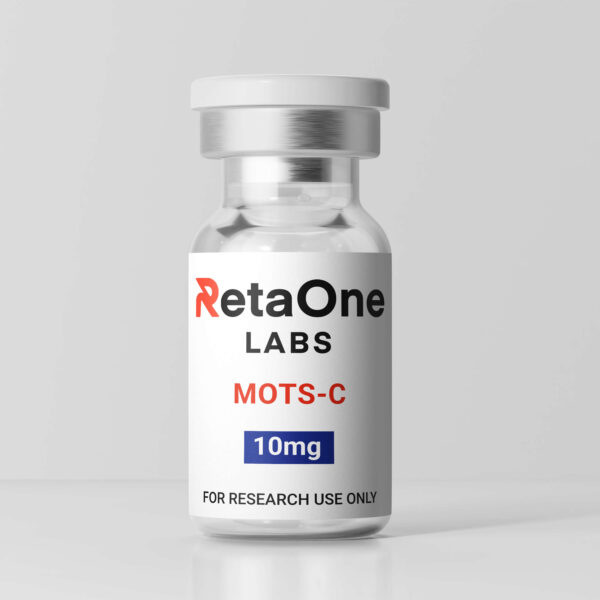
MOTS-c (10mg) is a synthetic version of a 16-amino acid mitochondrial-derived peptide originally encoded within the 12S rRNA region of mitochondrial DNA. It is often studied in metabolism, exercise, and aging research because of its reported roles in energy use and stress responses in experimental models.
In laboratory research, MOTS-c is used to investigate how mitochondrial signals affect cellular stress responses, energy balance, and gene activity in metabolic and aging pathways.
Product Specifications
- Synonyms: Mitochondrial peptide, Mitochondria-derived peptide
- Peptide Sequence: Met‑Arg‑Trp‑Gln‑Glu‑Met‑Gly‑Tyr‑Ile‑Phe‑Tyr‑Pro‑Arg‑Lys‑Leu‑Arg
- Chemical Formula: C₁₀₁H₁₅₂N₂₈O₂₂S₂
- Molecular Weight: 2174.64 g/mol.
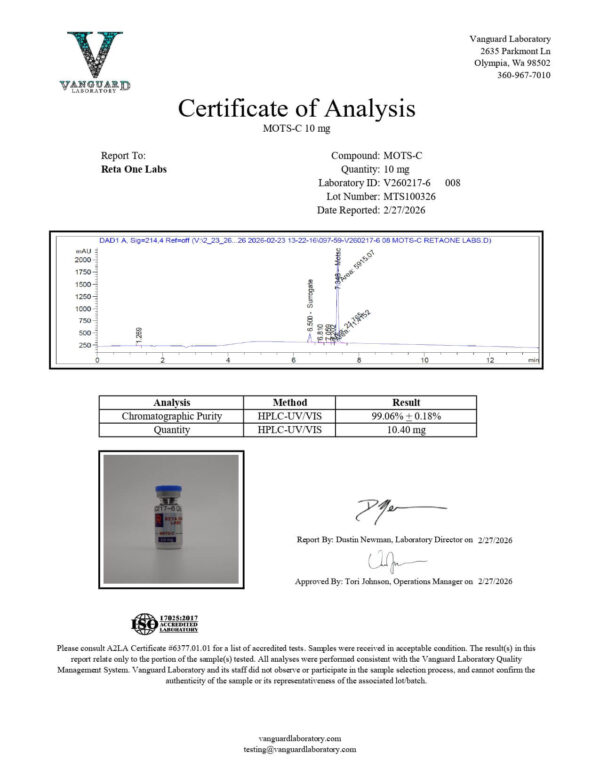
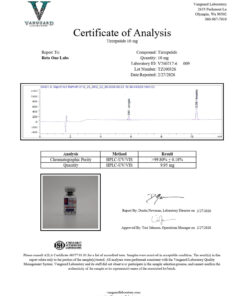
- Purity: Supplied as a high‑purity research peptide (typically ≥98–99% by HPLC), with identity and purity confirmed by chromatographic and mass‑spectrometric methods and summarized in a lot‑specific certificate of analysis (COA).
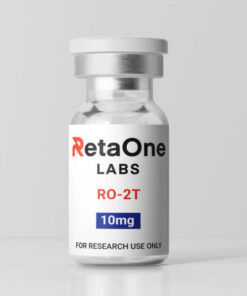
- Packaging Format: 10 mg lyophilized (freeze‑dried) MOTS-c in a sealed research vial, suitable for reconstitution in an appropriate solvent or buffer before experimental use.
- Storage Conditions: Store at −20°C, protected from light and moisture; minimize repeated freeze–thaw cycles to help preserve peptide integrity and activity.
- Intended Use: For laboratory research use only; not for human or veterinary use.
KEY CHARACTERISTICS OF MOTS-C (10MG)
- Mitochondrial-Derived Peptide: A short peptide used to study how mitochondrial signals can affect cell behavior and gene regulation.
- Metabolic Tissue Focus: Frequently explored in skeletal muscle and other energy-demanding tissues in research models where glucose use and energy balance are measured.
- Pathway Targets in Experimental Work: Reported to connect with AMPK activation, folate-related metabolic pathways, and gene networks involved in metabolism and stress response (model-dependent).
- Exercise and Aging Relevance: Commonly included in studies of exercise adaptation, performance endpoints, and age-associated metabolic changes in preclinical systems.
- Research-Grade Consistency: Supplied as a lyophilized, sequence-verified peptide with COA/HPLC/MS documentation to support repeatable experimental use.
HOW MOTS-C (10MG) SUPPORTS RESEARCH
MOTS-c (10mg) allows researchers to explore how a mitochondrial-encoded peptide influences metabolic homeostasis and stress adaptation. In animal and cell models, exogenous MOTS-c is used to study insulin sensitivity, glucose handling, and responses to high-fat diets or aging, providing insights into mitochondrial contributions to metabolic control.
Because MOTS-c is stress- and exercise-responsive, it is also employed to explore how mitochondrial signals affect physical performance, skeletal muscle function, and age-related decline, aligning with its use in longevity research.
RESEARCH APPLICATIONS & USAGE INFORMATION
- Metabolic Homeostasis and Insulin Sensitivity: Used in cell and mouse models to study glucose handling, insulin responsiveness, and diet-stress phenotypes, often alongside AMPK-related readouts.
- Muscle Metabolism and Exercise Biology: Applied to investigate mitochondrial peptide signaling in skeletal muscle, including performance measures and training-response markers in preclinical designs.
- Aging Pathways: Included in aging research to examine how MOTS-c signaling changes over time and how it relates to physical performance and metabolic markers in animal models.
- Cellular Stress and Gene‑Expression Research: Used in vitro to study stress-linked signaling behavior (including reported nuclear translocation in some models) and shifts in stress-response gene programs.
- Assay Development and Mitochondrial Signaling Studies: Used as a reference peptide in assays designed to detect or quantify MOTS-c or to model mitochondrial-derived peptide signaling in cell and tissue systems.
Note: Experimental conditions (e.g., dosing, timing, formulation, and route of administration) should be defined by qualified investigators according to their specific research aims, ethical approvals, and regulatory requirements. No dosing or clinical guidance is provided or implied.
HANDLING AND STORAGE RECOMMENDATIONS
- Keep lyophilized vials at −20°C or colder, dry, and protected from light.
- Let the sealed vial reach room temperature to reduce condensation.
- Use a sterile buffer/solvent suitable for your assay; mix gently until dissolved.
- Split into small, labeled portions to reduce freeze–thaw cycles. Store at 2-8°C for short-term storage.
- Use standard PPE and dispose of materials according to institutional waste procedures.
RESEARCH USE ONLY NOTICE
This product is intended for laboratory research use only and is not approved for human or veterinary use. It is not intended for diagnostic, therapeutic, or clinical applications. Any reference to biological activity or potential effects is based solely on preclinical or in‑vitro findings and should not be interpreted as validated clinical outcomes. Researchers are responsible for ensuring proper handling, storage, and disposal in accordance with institutional, federal, and international guidelines.
| Weight | 0.025 lbs |
|---|
Be the first to review “MOTS-C 10mg”
Related products
Uncategorized
Uncategorized
Uncategorized

Uncategorized
Uncategorized

Uncategorized
Uncategorized
Uncategorized
Reviews
There are no reviews yet.